Digital Platform Reward Dynamics: From Entry Incentives to Hierarchical Recognition and Optimized Reel Performance Approaches
Theo Washington · Jul 28, 2026

Digital Platform Reward Dynamics: From Entry Incentives to Hierarchical Recognition and Optimized Reel Performance Approaches
Introductory incentives on digital platforms often begin with simple entry-level offers that introduce users to core mechanics, and these initial rewards frequently connect to more complex structures over time. Data from industry reports indicates that such systems operate across multiple regions, including North America and Europe, where operators design pathways that link basic perks to advanced recognition tiers while incorporating reel-based optimization techniques. Observers note that these connections create sustained engagement patterns, especially when introductory elements such as free credits or trial spins transition smoothly into deposit-based matches and loyalty programs.
Mechanics of Initial Reward Entry Points
Entry incentives typically appear as no-deposit trials or limited-time credits that allow new participants to explore platform features without immediate financial commitment, and research from gaming associations shows these offers help establish user familiarity with reel mechanics and payout structures. In July 2026, several platforms reported increased adoption rates for mobile-accessible entry offers, where users could test high-return reel configurations early in their interaction sequence. Those who study platform data find that successful entry points often include clear eligibility rules and straightforward redemption processes, which reduce friction and encourage progression to subsequent reward layers.
Progression Toward Tiered Recognition Frameworks
Once users engage with introductory offers, platforms commonly route activity data into tiered recognition systems that escalate based on play volume, deposit frequency, and retention metrics, according to figures from international gaming research institutions. These frameworks assign status levels such as bronze, silver, or gold, each unlocking distinct benefits including personalized reel recommendations and enhanced return percentages on select games. But here's the thing: the scaling occurs through algorithmic tracking that monitors user behavior in real time, allowing operators to adjust recognition thresholds dynamically while maintaining compliance with regional regulatory standards from bodies like the Nevada Gaming Control Board.
Integration of High-Return Reel Strategies
High-return reel strategies emerge as users advance through recognition tiers, where platforms provide access to games with optimized return-to-player rates alongside bonus multipliers that amplify outcomes. Evidence suggests these strategies connect directly to prior incentive stages because accumulated loyalty points often convert into reel-specific advantages such as extended free spin sequences or reduced volatility settings. One study revealed that participants who moved from entry offers to mid-tier status achieved measurable improvements in session duration when paired with data-driven reel selections, and this pattern holds across various digital environments including desktop and mobile formats.
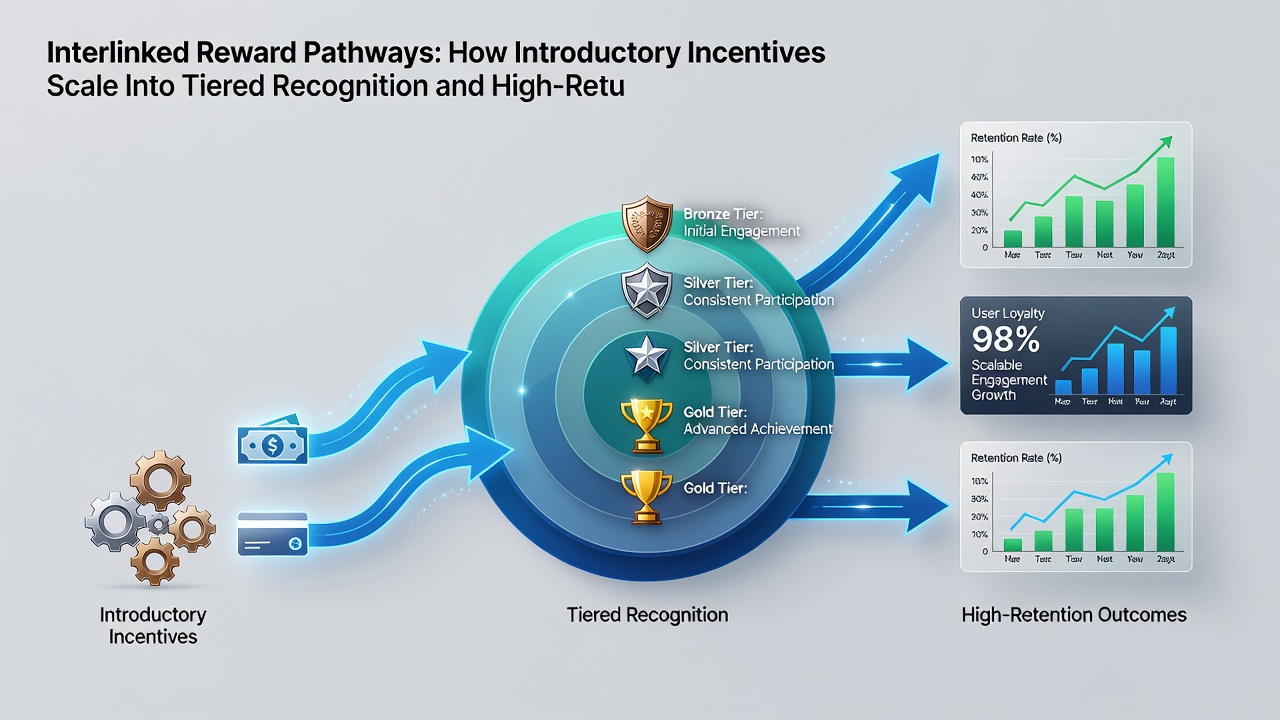
Platforms in different jurisdictions apply these reel optimizations differently, with some emphasizing Megaways formats while others focus on classic reel progressions, yet the underlying linkage remains consistent. What's interesting is how introductory incentives serve as the initial trigger that feeds user data into the tier system, which then surfaces tailored reel options designed to sustain long-term participation.
Cross-Platform Linkages and Data Flows
Interconnected reward pathways extend beyond single sites because many operators participate in shared loyalty networks that transfer recognition status across affiliated platforms, and this connectivity allows introductory offers on one service to influence reel strategies on another. According to reports issued by the Canadian Gaming Association, such integrations rely on centralized player tracking databases that preserve progression history while respecting data privacy requirements. Those who've examined these networks observe that the result is a more seamless experience where users encounter consistent incentive scaling regardless of the specific digital environment they choose.
Regulatory variations across regions influence how these pathways operate, with some markets requiring explicit disclosure of reel return rates at each tier level. Academic research papers from institutions examining digital entertainment economics highlight that transparent communication about progression mechanics correlates with higher user retention, particularly when introductory incentives clearly outline the route to advanced recognition and optimized reel access.
Conclusion
The structure of interlinked reward pathways demonstrates how introductory incentives systematically expand into tiered recognition programs that incorporate high-return reel strategies across digital platforms. Data indicates these connections rely on behavioral tracking, regional compliance standards, and cross-platform data sharing to maintain continuity from entry point to advanced status. Observers note that the overall system creates measurable progression routes supported by reel optimization techniques that adapt as users advance through recognition levels.